

Getting a roof to stay bone-dry and look sharp isn’t just about the sheets you pick — it’s about how they play together. If you’re learning how to overlap metal roofing, you’re learning the secret handshake of home protection. Think of it like layering for a Michigan winter hike. If you don’t tuck things in the right way, the elements will find a path inside.
Whether you’re sourcing high-quality 5-rib panels from The Metal Shop or just wrapping your head around the process, getting those seams right is the difference between a lifetime of protection and a living room puddle. Let’s break it down.
Basics of Metal Roofing Overlaps
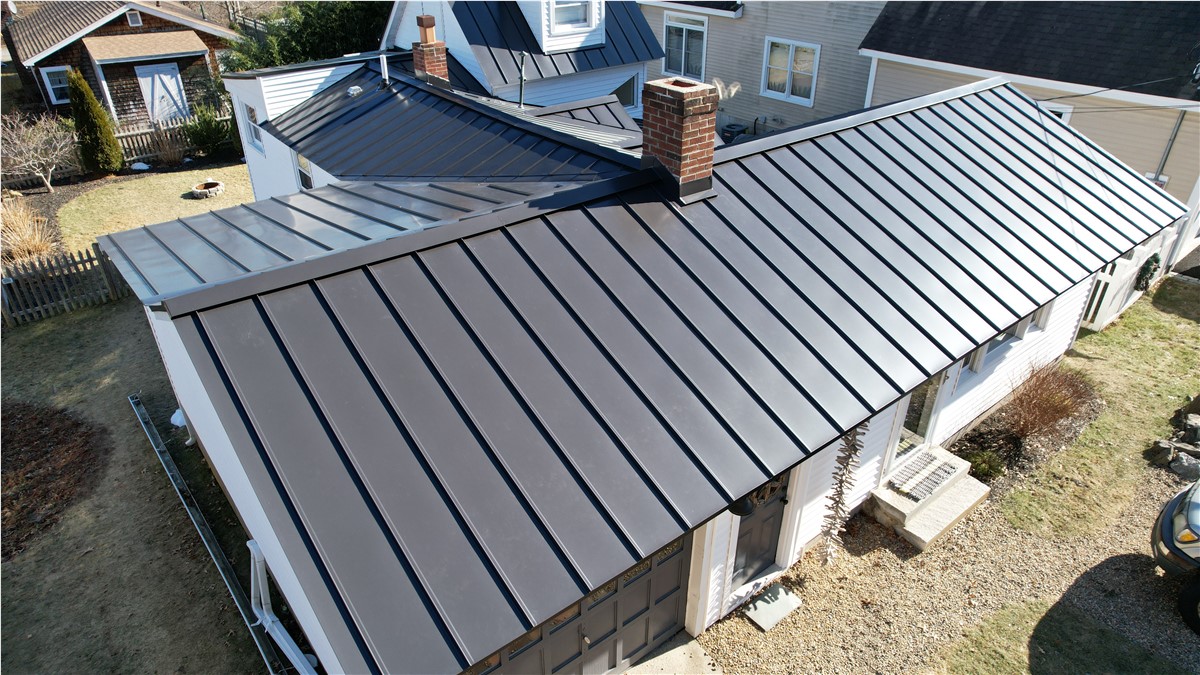
At its core, overlapping is making sure one panel sits securely over the edge of another. It sounds simple, but there’s a science to it. 5-rib panels — one of the most popular profiles carried at The Metal Shop — are designed with five raised ribs that act as the nesting and alignment point between sheets.
When you place panels, you aren’t just stacking them. You’re building a continuous barrier that moves water down the roof pitch and away from the structure. Too shallow an overlap and wind-driven rain sneaks underneath. Too deep and you’re wasting material. It’s all about that “just right” alignment.
Why Proper Overlap Matters for Roof Performance
A roof is a system, not a pile of parts. Water is sneaky — it uses capillary action to climb uphill if gaps are wide enough. Proper overlaps prevent:
- Moisture buildup that leads to rust
- Wind uplift during storms
- Pest entry points
- Premature panel failure
Getting this right means your roof does its job for decades. It’s the ultimate set-it-and-forget-it move.
Step-by-Step Guide to Overlapping 5-Rib Metal Roofing Panels
Work against the prevailing wind whenever possible so the wind blows over the seams rather than into them.
- Start at the Eave — Lay your first panel at the bottom corner with a slight overhang to direct water clear of the fascia.
- Align the Ribs — On a 5-rib panel, the overlap rib of the new panel nests over the outside rib of the previous panel. Make sure the ribs are fully seated — no gaps, no riding up.
- Check that the Panel Is Laying Flat — This is critical. Before you drive a single screw, confirm the overlapping panel is lying completely flat against the panel beneath it. Any bow or gap at the overlap is an invitation for water infiltration. Press the panels together firmly and sight down the length of the seam.
- Check for Square — Use a chalk line to keep rows straight. A half-inch off at the eave becomes a serious problem at the ridge.
- Work Upward — Once the bottom row is set, move up the slope, ensuring each upper panel overlaps the one below.
Side Lap vs. End Lap: What You Need to Know
Side Laps occur where the long edges of panels meet. On 5-rib panels, this means overlapping one full rib — the outside rib of the lower panel is covered by the outside rib of the upper panel, creating a tight, interlocking seam.
End Laps happen when your roof slope is longer than a single panel. The upper panel must overlap the lower panel by a minimum of 6 inches on steeper pitches. However — and this is important — if your roof pitch is under 3:12, standard overlap alone is not enough.
Low-Slope Roofs Under 3:12 Pitch: Caulk the Overlaps
On low-slope applications (under 3:12), water moves slowly and can back up under end laps. At The Metal Shop, we recommend sealing all end laps with Geocell 2300 caulk — a high-performance sealant we carry specifically for metal roofing applications. Apply a continuous bead along the top edge of the lower panel before laying the upper panel into place. This creates a watertight gasket that compensates for the reduced drainage speed on shallow pitches.
Don’t skip this step on low-slope roofs. It’s cheap insurance against a very expensive problem.
Tools and Materials for Effective Overlapping
- Snips or a metal saw — for trimming panels to size
- Tape measure — precision is everything
- Butyl tape or sealant — for standard waterproofing at seams
- Geocell 2300 caulk (available at The Metal Shop) — for low-slope end lap sealing
- Metal roof screws with neoprene washers — available at The Metal Shop
- Chalk line — keeps your rows clean and straight
How to Seal and Secure Overlaps for Waterproofing
Even a perfect overlap needs backup. Apply butyl tape or a bead of sealant along the top of the under-lapping rib before dropping the top panel into place. This compresses into a gasket when you drive your screws, filling micro-gaps that would otherwise let moisture in.
For pitches under 3:12, replace standard butyl tape at the end laps with Geocell 2300 — it’s specifically formulated for metal-to-metal contact and handles the thermal expansion and contraction that Michigan’s climate demands. The Metal Shop stocks it so you can grab it alongside your panels and be job-ready in one stop.
Fastening Techniques That Improve Roof Durability
Where you put the screws matters as much as how many you use. For 5-rib panels, fasten through the flat between the ribs and into the purlin beneath. When securing an overlap, make sure the screw passes through both panels and into solid backing.
Don’t over-tighten — you want the neoprene washer to compress slightly, not pancake out. Metal expands and contracts with temperature, and your fastening technique needs to allow for that movement. The Metal Shop team can point you to the right screw length and pattern for your specific application.
FAQ
1: What is a metal roofing overlap?
Layering metal panels over one another at the edges and ends to create a continuous, waterproof surface.
2: How much should 5-rib metal roofing panels overlap?
Side laps are one full rib. End laps are typically 6–12 inches, depending on pitch — more overlap on lower slopes.
3: Why is proper overlap important?
It prevents leaks, stops wind uplift, and keeps water from backing up under the panels.
4: Should I use sealant on overlaps?
Yes. For standard pitches, butyl tape works well. For pitches under 3:12, use Geocell 2300 caulk — available at The Metal Shop — at all end laps.
5: How do I make sure the panel is laying flat on the overlap?
Before fastening, press the panels firmly together and sight down the seam. Any gap or bow needs to be corrected before the screws go in. A panel that isn’t flat at the overlap will leak.
6: Can overlapping errors cause roof problems?
Absolutely. Poor overlaps lead to leaks, rust, and structural damage to the decking underneath. When in doubt, call The Metal Shop — we’re happy to walk you through it.
Have questions about 5-rib panels, Geocell 2300, or any other roofing materials? Stop by The Metal Shop or give us a call. Family-owned. Michigan-made. Built to last.