
How to choose a roofing style is a question many Michigan homeowners face when planning a new roof or updating an existing one. With so many roof types, materials, and design trends available, it can feel overwhelming to narrow down the right option.
A roofing style is not just about appearance. It affects durability, performance, cost, and how well your home functions over time — especially in a state like Michigan, where roofs face heavy snow loads, freeze-thaw cycles, and humid summers.
Choosing the wrong style can lead to higher long-term expenses and reduced performance. Choosing the right one supports lasting value, visual balance, and dependable protection. This guide breaks down every key factor so you can make a confident, informed decision.
Why Choosing the Right Roof Style Matters
Roofing style plays a larger role than most homeowners realize. It affects how your home handles weather, how it looks from the street, and how it holds value over time.
The right roof style helps:
- Protect the structure from environmental stress
- Complement your home’s design without competing with it
- Support efficient water and snow runoff — critical in Michigan winters
- Contribute to long-term durability and lower total ownership cost
A mismatch between roof style and home design creates both functional and visual challenges. That is why roofing style selection should always be intentional.
Common Roof Shapes and What They Do Best
Understanding roof shapes is the strongest starting point. Different shapes serve different purposes and perform better in certain environments.
Gable Roof
The most common roof shape in Michigan. Two sloping sides meet at a central ridge, forming a triangle at each end. Gable roofs offer excellent drainage, simple construction, and work well with most home styles.
Best for: Traditional homes, areas with heavy rainfall or snow
Hip Roof
All four sides slope downward toward the walls. Hip roofs are more wind-resistant than gable roofs and offer a balanced, symmetrical appearance.
Best for: Homes in storm-prone areas, ranch-style homes
Gambrel Roof
Two slopes on each side — a shallower upper slope and a steeper lower one. Common on barns and farmhouses, gambrel roofs maximize attic space.
Best for: Agricultural properties, farmhouse-style homes, attic storage needs
Flat or Low-Slope Roof
Minimal pitch with modern, clean lines. Requires careful material selection to prevent water pooling.
Best for: Modern or contemporary homes, commercial buildings
Shed Roof (Single Slope)
One continuous slope in a single direction. Simple, modern, and cost-effective.
Best for: Additions, modern home designs, outbuildings
How Home Architecture Guides Your Choice
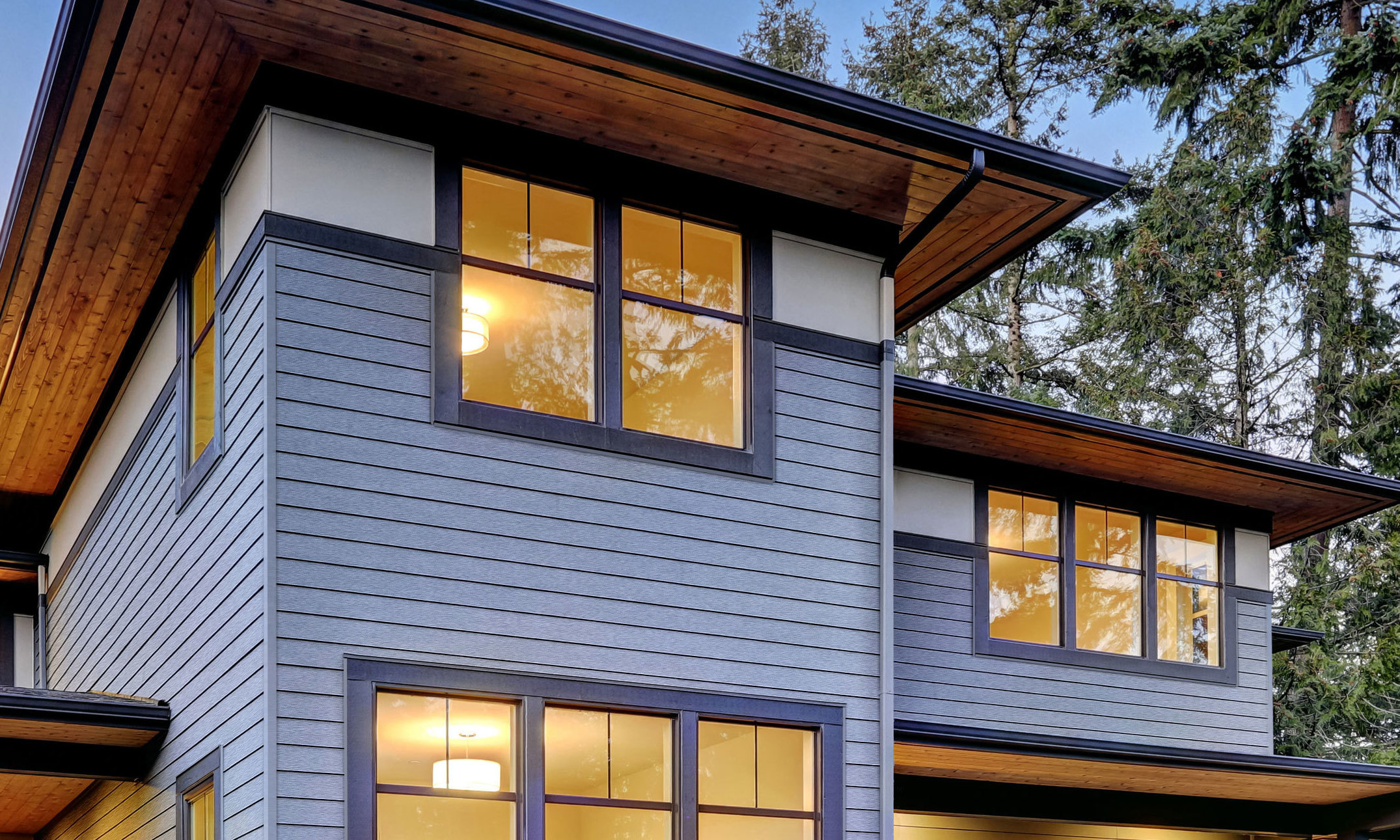
Your home’s architectural style should lead the roofing decision. The roof should complement the structure below it, not compete with it.
| Home Style | Recommended Roof Shape | Recommended Material |
|---|---|---|
| Traditional / Colonial | Gable or Hip | Standing seam, shingles |
| Farmhouse / Rural | Gambrel or Gable | 5-Rib metal panels |
| Modern / Contemporary | Flat, Shed, or Low-slope | Standing seam metal |
| Ranch | Hip or Low-pitch Gable | Board and batten metal |
| Agricultural / Pole Barn | Gable | 5-Rib ag panels |
When in doubt, look at neighboring homes with similar architecture for reference — then consider how metal roofing can elevate that look while delivering superior performance.
Climate Is the Most Important Factor in Michigan
Michigan’s climate is demanding. Your roof needs to handle:
- Heavy snow loads — steep pitches shed snow more effectively
- Freeze-thaw cycles — materials must expand and contract without cracking
- High winds — hip roofs and interlocking metal panels resist uplift
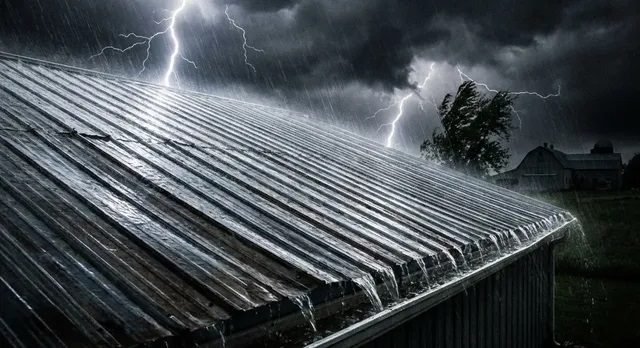
- Humidity and moisture — corrosion-resistant coatings are essential
This is where metal roofing has a clear advantage. Products engineered with Galvalume®-coated steel and AkzoNobel CERAM-A-STAR® paint systems are specifically built to handle Michigan’s climate extremes — resisting corrosion, UV degradation, and moisture damage over decades.
A steep-pitch gable or hip roof paired with metal panels is one of the most reliable combinations for Michigan homeowners.
Matching Roofing Materials to Your Style
Material and roof style work together. Here is how common materials pair with roof shapes:
Metal Roofing Panels
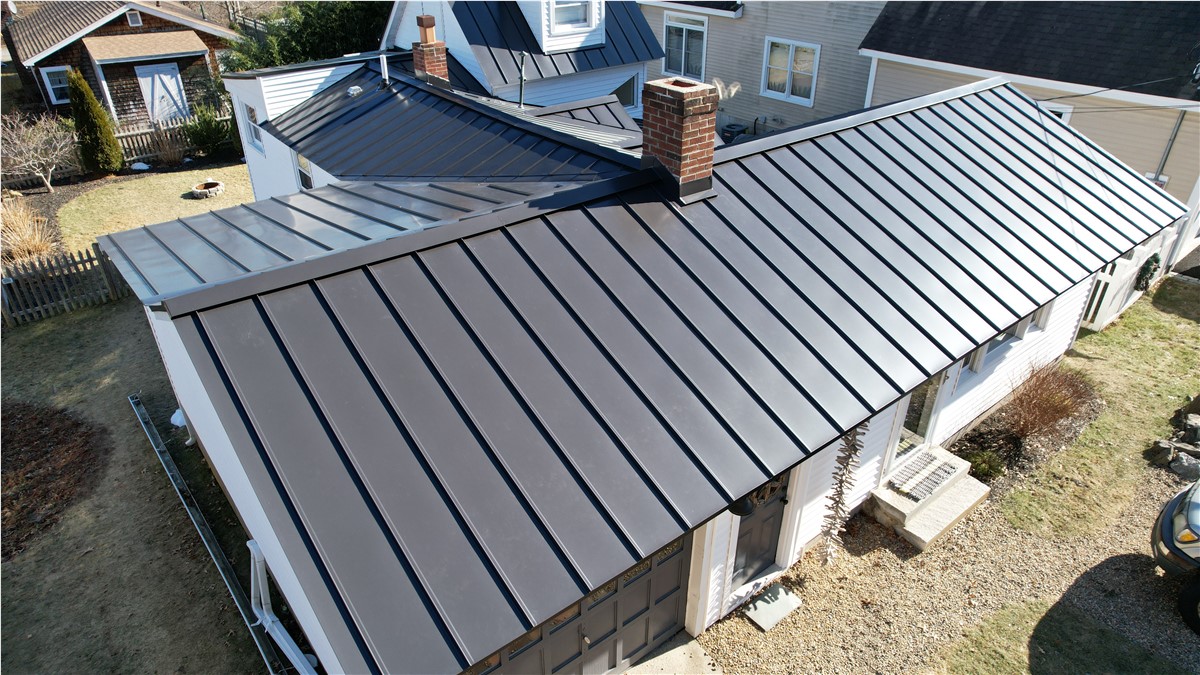
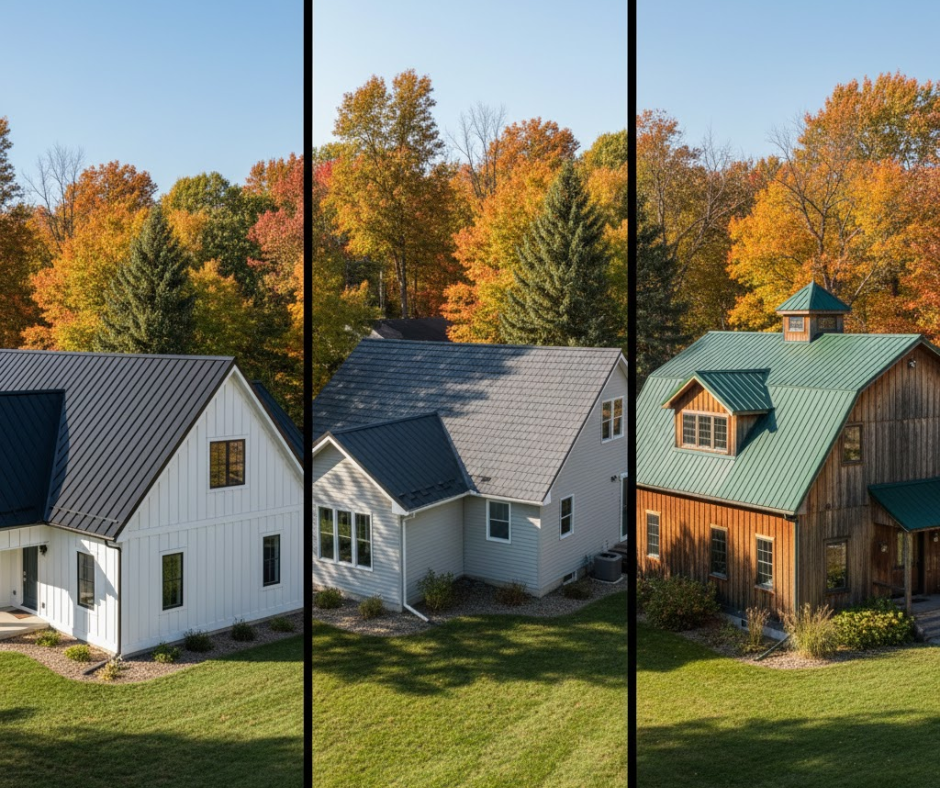
- Standing seam — sleek, modern look; works with gable, hip, and shed roofs; higher cost but premium performance
- 5-Rib panels — cost-effective, versatile; ideal for gable roofs on homes, barns, and agricultural buildings
- Board and batten — vertical profile with architectural character; suits farmhouse and rural styles
Metal Shingles
Designed to replicate traditional shingles while delivering the strength and longevity of metal. Options like Cedar Creek Shake and North Ridge Slate profiles offer classic aesthetics with modern performance — a strong choice for homeowners who want a traditional look without sacrificing durability.
Why Metal Outperforms Traditional Shingles
Traditional asphalt shingles typically last 15–25 years. Metal roofing, backed by a 40-year manufacturer warranty, can last 40–50+ years with minimal maintenance. Over time, that difference in lifespan translates directly into savings.
Budget: Think Long-Term, Not Just Upfront
Metal roofing costs more upfront than asphalt shingles — typically $250–$550 per square (100 sq ft), depending on material and profile. But the long-term math often favors metal significantly.
Example comparison: – Asphalt shingles replaced twice over 50 years = 2–3x the material and labor cost – Metal roof installed once, backed by a 40-year warranty = lower total cost of ownership
Budget factors to weigh: – Material lifespan and warranty coverage – Frequency of replacement – Maintenance requirements – Energy efficiency (metal reflects heat, reducing cooling costs)
Factory-direct pricing from a local manufacturer like The Metal Shop eliminates middleman markups — meaning you get better material at a lower price than most retail suppliers can offer.
Roof Pitch: How Slope Affects Everything
Roof pitch (the steepness of the slope) affects drainage, appearance, and material compatibility.
- High pitch (6:12 and above): Better snow and water runoff, adds visual height, works with most metal profiles
- Low pitch (2:12–4:12): Modern aesthetic, requires standing seam or specifically rated panels to prevent water infiltration
- Flat (under 2:12): Needs specialized low-slope systems; not ideal for Michigan’s snow loads without proper engineering
For most Michigan homes, a 4:12 to 8:12 pitch hits the sweet spot — effective drainage, strong curb appeal, and compatibility with a wide range of metal roofing profiles.
Curb Appeal and Long-Term Property Value
The roof covers roughly 40% of your home’s visible exterior. It shapes first impressions and directly impacts resale value.
Curb appeal tips when choosing a roofing style: – Match the roof pitch and shape to your home’s proportions – Choose a color that complements your siding and trim (not just what’s trendy) – Consider how the profile looks from the street — standing seam reads modern, 5-Rib reads classic, board and batten reads architectural – Metal roofing’s clean lines and consistent finish hold their appearance longer than asphalt
Homes with metal roofing consistently stand out in Michigan’s rural and suburban markets — and buyers increasingly recognize the value of a roof that won’t need replacing.
Planning for Future Upgrades
Your roof style should also account for what comes next:
- Solar panels work best on south-facing gable or hip roofs with moderate pitch; standing seam metal is ideal because panels clamp on without penetrating the roof
- Attic expansion is easier with steeper pitches (gambrel and high-pitch gable)
- Additions and outbuildings are simpler to match when you start with a versatile profile like 5-Rib or standing seam
Thinking ahead now reduces costly changes later.
Tips for Working With a Roofing Professional
Professional input adds clarity and prevents costly mistakes. When consulting with a roofing expert or manufacturer, ask:
- What profiles perform best for my roof pitch and climate?
- What warranty coverage comes with the material?
- Can you fabricate custom trims or non-standard shapes?
- What are the lead times and delivery options?
At The Metal Shop, we offer free estimates, precision roof measurements, and roof inspections — so you get accurate material lists and expert guidance before you commit to anything.
Making the Final Decision
A strong roofing style decision balances five things:
- Home architecture — the style should complement your structure
- Climate conditions — Michigan demands durable, weather-engineered materials
- Material compatibility — match profile to pitch and purpose
- Budget expectations — think total cost of ownership, not just upfront price
- Long-term performance — choose a roof you won’t have to think about for decades
Conclusion
Choosing a roofing style is one of the most important decisions you will make as a homeowner. It shapes how your home looks, how it performs, and what it costs you over time.
By understanding roof shapes, climate demands, material options, and long-term value, you can choose a style that delivers lasting confidence. And if you want expert guidance specific to your home and Michigan’s conditions, The Metal Shop is here to help — with factory-direct pricing, 40-year warranties, and a team that knows this state’s weather as well as anyone.
Ready to get started? Call us at (269) 215-2003 or visit themetalshopllc.com for a free estimate.
FAQs
-
What is the most popular roof style in Michigan?
Gable and hip roofs are the most common in Michigan due to their effective snow and water drainage and compatibility with a wide range of home styles.
-
How does Michigan’s climate affect roof style choice?
Michigan’s heavy snow, freeze-thaw cycles, and high winds favor steeper pitches, wind-resistant shapes like hip roofs, and durable materials like Galvalume®-coated steel.
-
Is metal roofing a good choice for Michigan homes?
Yes. Metal roofing is engineered for Michigan’s climate extremes, backed by 40-year warranties, and offers a lower total cost of ownership than traditional asphalt shingles.
-
Are some roofing styles better for adding attic space?
Yes. Steeper pitches — especially gambrel and high-pitch gable roofs — allow significantly more usable attic space.
-
Can I get custom roofing profiles made locally?
Absolutely. The Metal Shop fabricates custom trims, non-standard shapes, and specialty profiles in-house. If you can draw it, we can make it.
-
When should I consult a roofing professional?
Early in the planning process — before purchasing materials. A professional consultation helps align your design goals with structural requirements, climate demands, and budget.