

Building a solid structure starts with what’s happening underground. If you’re looking at a new project, the question of how deep do pole barn posts need to be is likely the first thing on your mind. It’s not just about digging a hole and dropping in some wood; it’s about making sure your building doesn’t decide to take a walk when the wind picks up or the ground freezes.
Think of your posts as the anchor for your entire pole barn. If the anchor is too shallow, you’re asking for trouble. If it’s right, you’ve got a building that’ll outlast the truck in your driveway. Let’s break down the science of getting those posts set right so your pole barn kits actually stay where you put them.
Two Types of Pole Barn Packages — Two Different Foundation Approaches
At The Metal Shop LLC, we offer two distinct building systems, and they handle the foundation question very differently. Understanding which system you’re working with changes everything about how you plan your post depth and footing design.
Traditional Pole Barn — The 6×6 Post in the Ground
The traditional pole barn uses 6×6 pressure-treated wood posts embedded directly into the earth. This is the classic post-frame method used across Michigan for decades. The posts carry the entire structural load, which means the depth and quality of their burial is everything. There is no concrete foundation wall or steel frame to share the work — it all starts and ends with how well those posts are set.
For this system, proper embedment depth, frost protection, and drainage at the base of each hole are non-negotiable. Get this right, and you have a building that will stand for generations. Cut corners here, and you’ll be dealing with leaning walls and stuck doors before you know it.
K Building — Steel Mainframes on Concrete Piers
The K Building is a hybrid steel and wood system that takes a completely different approach. Instead of wood posts in the ground, the K Building uses all-steel tapered leg mainframes that sit on concrete piers or a monopour slab. There is no wood buried in the earth at all, which eliminates the risk of post rot over time.
For a standard 40-foot wide K Building, those concrete piers are typically 18 inches in diameter. The steel mainframes bolt directly to the piers, transferring the load into the concrete and down into stable soil below the frost line.
This is a key distinction: with a traditional pole barn, the 6×6 post itself must go below the frost line. With a K Building, the concrete pier must extend below the frost line. The goal is the same — get your structural anchor into ground that doesn’t move when Michigan winters do their worst — but the method is different.
Pole Barn Post Depth Requirements
When it comes to pole barn post depth requirements, there isn’t a “one size fits all” answer, but there are some golden rules. For most standard buildings, you’re looking at a depth of 4 to 6 feet. This range covers the needs of most residential and agricultural structures in the US.
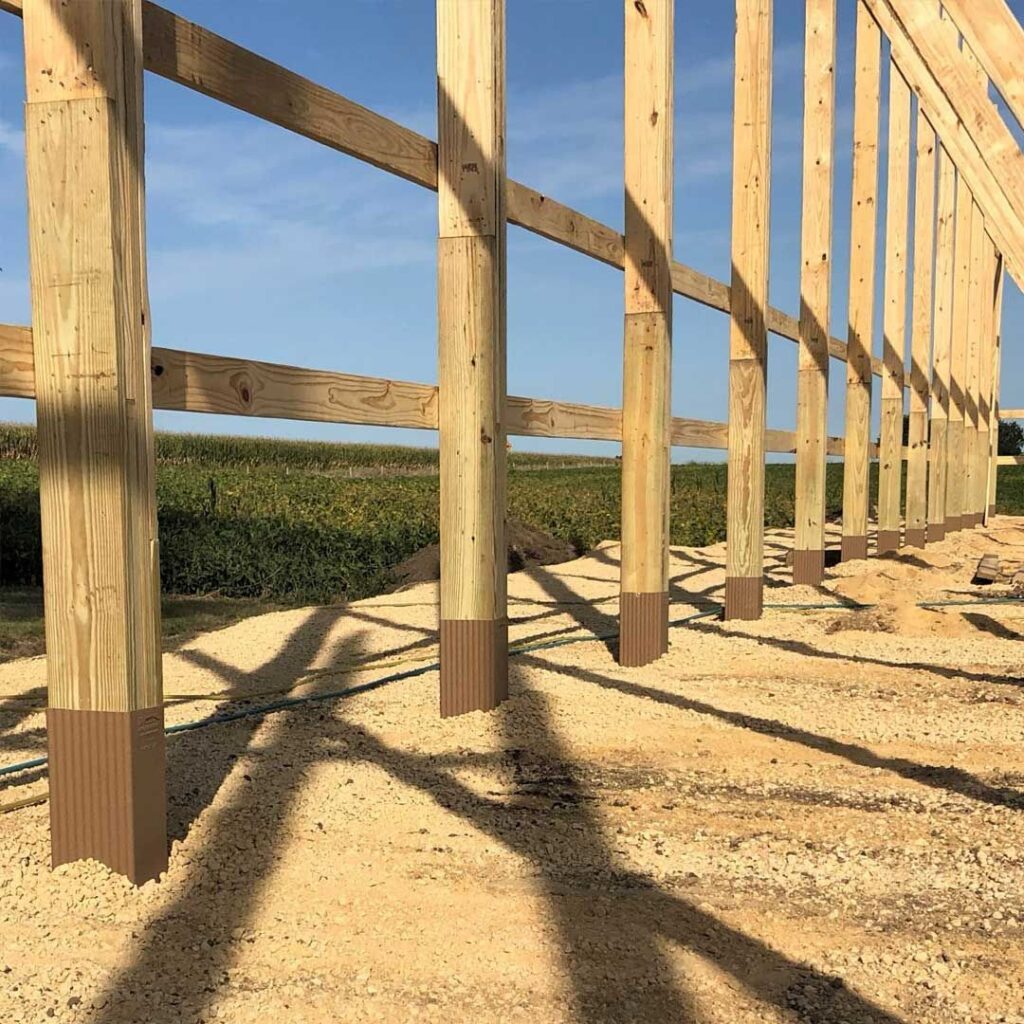
The goal is to provide enough lateral support. Your posts aren’t just holding up the roof weight — they are resisting the “push” from the wind. If you only go 2 feet down, a heavy storm could literally tilt your building. Most pros agree that a minimum embedment depth of 4 feet is the baseline for anything meant to last.
Why Post Embedment Matters More Than You Think
Structural stability for post-frame buildings depends entirely on the connection between the vertical post and the earth. This is called embedment. It’s the “cheat code” for a building that doesn’t lean over time.
If your embedment is too shallow, you risk “uplift.” This happens when high winds create a vacuum effect on your roof, literally trying to pull the posts out of the ground. Proper depth ensures sufficient friction and soil and concrete weight to keep everything pinned down. It’s the difference between a permanent structure and a very expensive kite.
Minimum vs. Recommended Pole Barn Post Depth
There is a difference between what you can get away with and what you should actually do.
- Minimum Embedment Depth: Usually 3 feet, but only for very small, open-sided sheds in areas with zero frost risk and perfect soil.
- Recommended Depth: 4 to 5 feet for most standard 10 or 12-foot-tall barns.
- Heavy Duty Depth: 6 feet or more if you are building a massive shop with high sidewalls or in a high wind zone.
Going an extra foot deeper is cheap insurance. It’s way easier to dig a slightly deeper hole now than to try and fix a sagging roofline five years down the road.
How Frost Lines Influence Post Depth — For Both Systems
If you live anywhere that gets a real winter, the frost line is your biggest boss. When water in the soil freezes, it expands. This creates “frost heave,” a force strong enough to lift concrete slabs and snap wooden posts.
For traditional pole barns: Your 6×6 post must sit below the frost line. The bottom of the post must rest on stable, unfrozen ground that won’t shift when temperatures drop.
For K Buildings: Your concrete pier must extend below the frost line. The steel mainframe leg is only as stable as the pier it’s bolted to. If that pier is sitting in soil that freezes and heaves, the whole frame moves with it.
In Michigan, the frost line ranges from 36 to 48 inches, depending on your region. In the Upper Peninsula, you may be looking at the deeper end of that range. Always check your local building department’s frost depth requirement before you finalize your design — for either system.
Soil Conditions and Their Effect on Post Setbacks
Not all dirt is created equal. Your soil conditions dictate how your foundation behaves.
- Clay Soil: Holds water and expands. Sticky but can be unstable when saturated.
- Sandy Soil: Drains well but doesn’t grip the post tightly. May require wider footings to prevent sinking.
- Rock/Ledge: Excellent support, but you’ll need specialized anchors if you can’t reach standard depth.
Soil stability and post footing design go hand in hand. If you’re working with soft soil, compensate with more depth or a wider base to spread the load.
Step-by-Step: Calculating Post Length for Your Pole Barn
Getting your pole barn post length standard right involves some basic math.
- Determine Sidewall Height: Let’s say you want a 12-foot ceiling.
- Add Burial Depth: Add your 4 feet of depth.
- Add Roof System Space: Add about 1 foot for the trusses and headers.
- Total: In this case, you’d need at least 17 to 18-foot posts.
Always round up. It’s much easier to trim a few inches off the top than to figure out how to stretch a post that’s already buried.
Common Mistakes When Setting Pole Barn Posts
Even experienced DIYers trip up here. One of the biggest blunders is neglecting pole barn uplift resistance methods — attaching cleats or blocks to the bottom of the post so it acts like a barb, making it nearly impossible for wind to pull it out.
Another mistake is improper drainage. If water can’t escape from the bottom of the hole, your pressure-treated posts are sitting in a bathtub. Even the best-treated wood has a limit. Using an auger to get a clean, vertical hole prevents loose soil from falling back in and throwing off your levels.
How Concrete Footings and Gravel Backfill Affect Stability
| Feature | Concrete Footing | Gravel Backfill |
|---|---|---|
| Support | Best for heavy loads | Good for lighter sheds |
| Drainage | Can trap water if not shaped right | Excellent drainage |
| Uplift Resistance | Very high | Moderate |
| Effort | Higher | Lower |
For a long-lasting barn, a pre-cast concrete “cookie” or a poured bottom footing is the way to go. This prevents the post from sinking into the earth over time. Using gravel for the rest of the fill allows water to drain away from the wood, preserving the post-frame construction for decades.
Engineering and Code Guidelines for Post-Burial Depth
Always check your post-frame building code requirements before you start digging. Local building departments have specific rules based on your area’s wind speed and snow load.
Pole barn foundation engineering isn’t just a suggestion — it’s the law in many Michigan counties. They may require a specific hole diameter (usually 18 to 24 inches) to ensure there is enough concrete around the post to handle lateral pressure. Following these guidelines keeps your insurance company happy and your property value up.
FAQs
1: What’s the typical depth for pole barn posts?
For most standard buildings in the US, 4 feet is the industry standard. This provides a balance of stability and frost protection.
2: Do pole barn posts need to be below the frost line?
Yes. If you stay above the frost line, the ground will push your posts upward during winter, leading to a crooked building and stuck doors. This applies to both 6×6 wood posts in traditional pole barns and concrete piers used in K Building systems.
3: Can I set posts shallower in sandy soil?
Actually, sandy soil often requires deeper holes or wider footings because it doesn’t grip the post as tightly as compacted clay or loam.
4: Is a concrete footing required at the bottom of the hole?
While some small structures use packed gravel, a concrete footing is highly recommended to prevent the post from sinking under the weight of the roof and snow.
5: How do I calculate total post length?
Add your desired interior ceiling height, the thickness of your roof trusses, and your burial depth (usually 4–5 feet). Always buy a foot longer than you think you need.
6: What’s the difference between a traditional pole barn and a K Building when it comes to foundations?
A traditional pole barn uses 6×6 pressure-treated wood posts buried directly in the ground — those posts must go below the frost line. A K Building uses all-steel mainframes anchored to concrete piers, and those piers must extend below the frost line. Same principle, different execution.
Getting the depth right is the most important part of your build. It’s the hidden strength that keeps everything level when the weather gets wild. Whether you’re going with a traditional pole barn package or a K Building system, The Metal Shop LLC can help you choose the right option for your site and budget. Call us at (269) 215-2003 or visit themetalshopllc.com for a free estimate.