
How to Cut Metal Roofing Panels
Knowing how to cut metal roofing panels correctly is one of the most important skills for any homeowner, builder, or contractor working with roofing materials. Mistakes while cutting metal roofing can lead to uneven edges, wasted metal sheets, and costly rework — and using the wrong best tool makes it worse.
At The Metal Shop, we’ve spent nearly 20 years working with steel, aluminum, and copper metal roofing panels. We know what works in the field and what doesn’t. This guide walks you through the right metal cutter tool, proper measuring techniques, safe cutting methods, and best practices so you can cut with confidence and precision every time.
Tools You’ll Need to Cut Metal Roofing Panels
Choosing the right best tool is the single most important decision before you make a cut. The best way to cut metal roofing depends on panel thickness, cut length, and cut shape.
Recommended tools for cutting sheet metal and roofing sheets:
- Aviation snips (hand snips) — the professional’s first choice for roofing sheets and siding panels
- Nibblers — ideal for detailed cuts, curves, and narrow openings
- Angle grinders — useful for short, precise trimming on heavier metal sheets
- Electric metal roofing shears — great for longer straight cuts on larger jobs
Important note from The Metal Shop: We do not recommend circular saws with a standard saw blade for cutting metal roofing panels. Circular saws generate excessive heat and sparks that can damage the panel’s protective coating, void warranties, and create dangerous debris. Stick to the tools listed above for clean, safe results.
Our Top Recommendation: Midwest Snips — Angled Long-Bill Aviation Snips
Aviation snips are one of the most reliable metal cutter tool options available. They provide precise control, produce clean edges, and avoid the heat or sparks that power tools introduce to finished surfaces during cutting sheet metal.
Midwest Snips are color-coded by cut direction:
- Red handle — cuts to the left (counterclockwise curves)
- Green handle — cuts to the right (clockwise curves)
- Yellow handle — straight cuts in either direction
For most roofing and siding work, a yellow or green handle long-bill snip handles the majority of metal roofing panels cleanly and efficiently.
Measuring and Marking Metal Roofing Panels
Accurate measuring and marking are critical before any cutting begins. Poor layout lines lead to uneven cut sheet metal edges and wasted material.
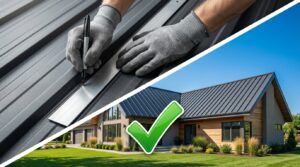
Steps for measuring and marking:
- Place the panel on a stable, flat surface
- Use a tape measure to confirm the required cut length or width
- Use a straightedge, square, or chalk line to mark longer runs
- Mark with a fine-tip permanent marker — visible on painted and bare metal sheets
- Mark on the back side of the panel, when possible, to protect the finish
- Measure twice before you cut
Clear markings guide your metal cutter tool and reduce mistakes before the first cutting action is made.
Cutting Methods for Metal Roofing Panels
Different cuts require different tools. Matching your method to the material thickness and profile is the best way to cut metal roofing efficiently.
Straight Cuts
Aviation snips (yellow handle) are the go-to for straight cuts on standard metal roofing panels. For longer runs, electric metal roofing shears provide consistent results without damaging the coating.
Short Cuts and Edge Trimming
For trimming panel ends or working in tight areas, hand snips offer better control when cutting sheet metal. Always begin at the panel edge — never force a cut into the middle of the sheet.
Detailed Cuts, Curves, and Notches
Nibblers are ideal when cutting metal roofing around vents, corners, or other obstacles. Mark the shape clearly and proceed slowly. Let the metal cutter tool perform the work without excessive pressure.
Angled Cuts
Mark both sides of the angle before cutting. Make short straight passes first to define the shape, then complete the full cut. Avoid bending or flexing the roofing sheets during the process.
Step-by-Step Cutting Process
Follow this structured approach for consistent, professional results:
- Place the metal roofing panels on a stable, flat surface
- Measure and clearly mark the cut line
- Select the appropriate metal cutter tool
- Start the cut at the panel edge
- Use smooth, steady strokes during cutting
- Keep the waste side curling away for better visibility
- Support both sides of the panel
- Deburr the edge after you cut sheet metal using a file
Following this process reduces material waste and ensures your roofing project maintains a clean, uniform appearance.
Tips to Prevent Damage and Burrs
- Use sharp snips or blades rated for cutting sheet metal — dull tools tear instead of cut
- Never force the tool through the panel
- Maintain consistent pressure while cutting metal roofing
- Support panels evenly during the process
- Lightly file edges after each cut
Protecting the coating during cutting preserves warranty coverage and long-term panel durability.
Safety Best Practices
Safety is essential whenever cutting metal roofing panels. Sharp edges and flying fragments can cause serious injury.
Always:
- Wear cut-resistant gloves
- Use safety glasses or a face shield
- Secure metal sheets before beginning
- Keep your hands clear of the cutting path
- Work in a well-lit environment
Proper safety habits protect both you and your materials.
Maintenance After Cutting
After you cut sheet metal, inspect all edges carefully:
- Remove burrs or sharp points
- Store panels flat to prevent warping
- Keep roofing sheets dry and protected
For profiles like 5-Rib metal roofing panels, consistent accuracy ensures proper alignment and a uniform finish across the roof.
Why Cutting Accuracy Matters
Metal roofing panels are manufactured to precise standards. Maintaining that precision when you cut or handle metal sheets protects material value and reduces waste and helps prevent surface irregularities explained in a metal roofing oil canning explanation guide.
Using the best tool, following proper cutting techniques, and selecting the correct metal cutter tool ensures your roofing materials perform as intended over their full lifespan, especially when applied through a residential metal roof installation process.
The right method isn’t just about making a clean cut — it protects your investment and keeps your project on schedule.
FAQs
1. What’s the best tool to cut metal roofing panels?
Aviation snips, particularly long-bill snips, are the professional’s choice for most cutting metal roofing applications. For detailed shapes, use a nibbler or metal roofing shears.
2. Can I use a circular saw with a saw blade?
It’s not recommended. Circular saws generate heat and sparks that can damage coatings when cutting sheet metal. Safer options include hand snips and electric shears.
3. Do I need special safety equipment?
Yes. Gloves and eye protection are required when cutting any type of metal sheet.
4. How do I mark panels before I cut?
Use a tape measure and straightedge, then mark clearly with a permanent marker on the back side of the roofing sheets when possible.
5. What causes jagged edges when cutting metal roofing?
Dull tools, rushing the process, or using the wrong metal cutter tool are the most common causes.
Have questions about how to cut metal roofing, selecting the best tool, or choosing the right metal roofing panels for your project?
The Metal Shop is here to help.
📞 (269) 215-2003
🌐 https://themetalshopllc.com/
📍 12945 South M-66 Hwy, Bellevue, MI 49021
BBB Accredited Since 2023