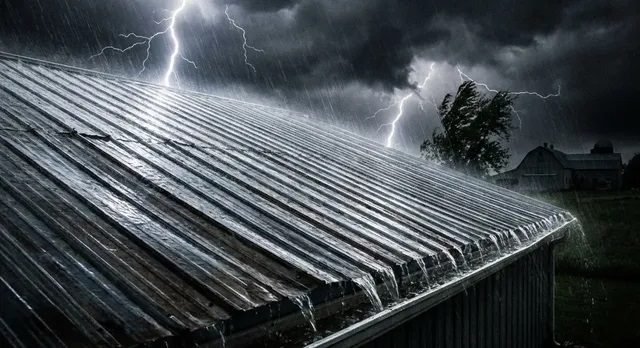


The cheapest way to insulate a metal building is a common concern for property owners who want better temperature control without overspending. Steel buildings are strong and durable, but without proper insulation, they can become extremely hot in summer and uncomfortably cold in winter. This leads to higher energy usage, moisture issues, and reduced comfort inside the building.
Insulating a metal building does not need to be complicated or expensive when the right materials and methods are chosen. This guide explains what makes steel buildings different, how insulation works, the most cost-effective insulation options, and how to plan insulation for long term performance. Whether the structure is used for storage, work, or agricultural purposes, proper steel building insulation helps protect both the building and what is inside it.
What Makes Steel Buildings Different to Insulate
Steel buildings behave differently from traditional wood structures. Metal conducts heat more efficiently, which means temperature changes outside can quickly affect indoor conditions.
Key challenges include:
- Rapid heat transfer through steel panels
- Condensation buildup due to temperature differences
- Limited thermal resistance without insulation
Because steel expands and contracts with temperature changes, insulation for metal buildings must provide consistent coverage and help manage moisture. Without insulation, even well-built metal structures can experience energy loss and interior discomfort.
Understanding Insulation Basics
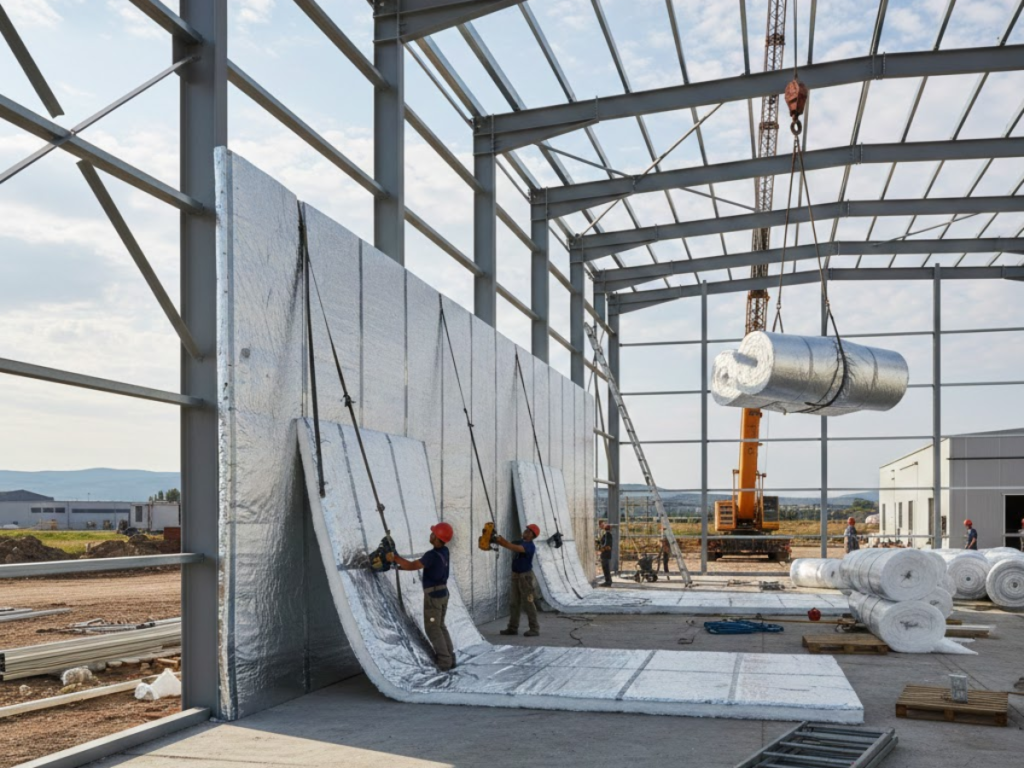
Insulation works by slowing down heat transfer between the inside and outside of a building. In steel buildings, insulation helps regulate temperature and reduce condensation risks.
Important insulation concepts include:
- R value, which measures thermal resistance
- Air barriers that reduce heat movement
- Vapor control to manage moisture
Metal building insulation must address both temperature control and condensation. Choosing the right insulation type helps improve energy efficiency while maintaining interior stability.
Types of Insulation for Steel Buildings
Several insulation options are commonly used for steel building insulation. Each option varies in cost, performance, and ease of use.
Fiberglass Insulation
Fiberglass is one of the most cost-effective options and is widely used in metal buildings. It is often available in metal building insulation rolls and provides reliable thermal resistance.
Benefits include:
- Affordable pricing
- Wide availability
- Good thermal performance
Rigid Board Insulation
Rigid board insulation offers strong thermal resistance in a compact form. It is well-suited for locations where available space is minimal.
Key features:
- High R value per inch
- Moisture-resistant options available
- Long-term durability
Spray Foam Insulation
Spray foam creates a tight seal that helps limit air movement while delivering strong insulation performance. While it offers strong results, it is often more expensive than other methods.
Considerations include:
- Higher upfront cost
- Strong thermal and moisture control
- Long-term energy efficiency
Reflective Insulation
Reflective insulation is designed to reduce radiant heat. It works best in warm climates and is often combined with other insulation types.
Each option has a different cost profile, which is why understanding the cheapest way to insulate a metal building depends on usage needs and climate.
Preparing Your Steel Building for Insulation
Proper preparation helps insulation perform effectively over time. A clean and dry surface supports consistent insulation coverage.
Preparation steps include:
- Inspecting steel panels for gaps or damage
- Ensuring surfaces are dry and free from debris
- Identifying areas prone to moisture buildup
Planning insulation layout helps reduce material waste and improve coverage across the entire building.
Best Insulation Methods for Steel Buildings
The best insulation method balances cost, performance, and long-term value. For many property owners, fiberglass insulation remains the cheapest way to insulate a metal building while still delivering reliable results.
Cost-effective approaches include:
- Using fiberglass insulation rolls for large surface areas
- Combining rigid boards in high-exposure zones
- Selecting insulation thickness based on climate needs
Metal roof insulation is especially important since heat gain and loss often occur through the roof surface. Proper insulation helps maintain stable indoor temperatures and reduces energy strain.
For agricultural or storage structures like a steel pole barn, insulation helps protect equipment, materials, and interior spaces from temperature extremes.
Maintenance and Inspection
Once insulation is in place, regular checks help maintain performance. Steel building insulation can last many years when kept in good condition.
Helpful maintenance practices include:
- Inspecting for moisture or compression
- Checking insulation alignment
- Monitoring indoor temperature consistency
Regular inspection supports long-term energy efficiency and protects the insulation investment.
Cost Considerations and Energy Savings
The cheapest way to insulate a metal building often delivers strong returns over time. While upfront cost matters, long term energy savings play a major role in overall value.
Benefits of proper insulation include:
- Lower heating and cooling demands
- Reduced condensation risks
- Improved interior comfort
Cost effective insulation choices help balance initial expense with long term savings, especially in steel structures that are exposed to extreme temperatures.
Choosing the Right Insulation for Your Needs
Selecting insulation depends on building use, climate, and budget. Storage buildings may require different insulation than workspaces or agricultural structures.
Key questions to consider:
- How is the building used year-round?
- What climate conditions affect the structure?
- What level of energy efficiency is desired?
Answering these questions helps identify the most practical and cost-effective insulation solution.
Conclusion
Finding the cheapest way to insulate a metal building involves understanding how steel structures behave and choosing insulation that balances cost and performance. Steel building insulation plays a vital role in temperature control, moisture management, and energy efficiency.
By selecting appropriate insulation materials, preparing the building properly, and planning for long-term use, right metal building owners can improve comfort and reduce energy costs. Insulation is not just an added feature, but a practical investment in the durability and usability of steel buildings.
FAQs
1. What is the best insulation for a steel building?
Fiberglass insulation is commonly chosen due to affordability and reliable thermal performance, making it a popular option for steel buildings.
2. How does insulation improve energy efficiency?
Insulation reduces heat transfer, helping maintain stable indoor temperatures and lowering energy usage.
3. What R value do I need for a steel building?
The required R value depends on climate and building use. Colder regions typically require higher R values for effective insulation.